Jonas Patterson · 25 September 2026
Schools Partner with Researchers to Monitor Storm Effects on Canopy Nutrient Cycles and Moth Populations
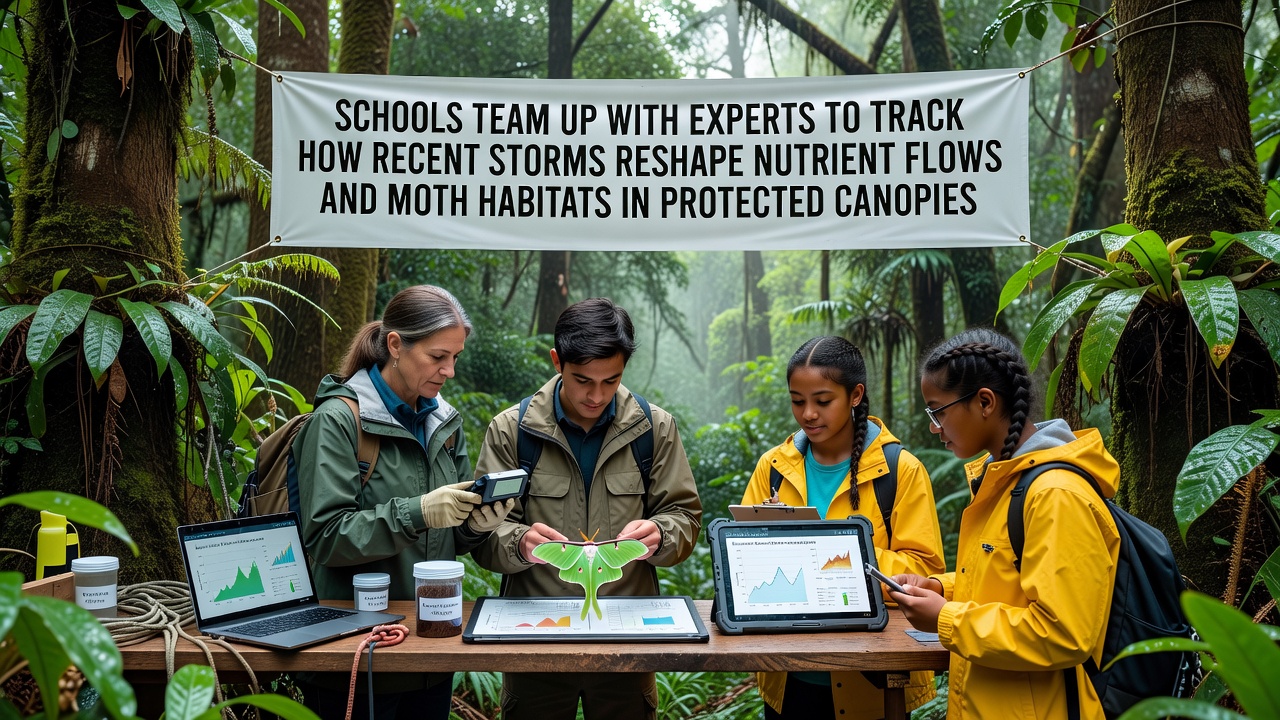
Local educational institutions have joined forces with field biologists and forestry specialists to document how intense weather events redistribute soil nutrients while altering the sheltered environments that sustain moth species in the upper layers of protected woodlands. Teams began coordinated fieldwork in early 2025 after a series of powerful storms crossed the region, and data collection continued through September 2026 when additional precipitation events provided further opportunities for measurement. Participants deploy sensors at multiple canopy heights, collect leaf litter samples, and conduct nighttime surveys to record moth activity across fixed transects that span both exposed and sheltered zones.
Storm Patterns and Initial Observations
Weather records indicate that three major systems moved through the area between March and July 2025, each delivering heavy rainfall followed by strong winds that stripped foliage and opened gaps in the canopy. These gaps allowed increased light penetration, which in turn accelerated decomposition rates of fallen organic material. Researchers noted that nutrient leaching occurred more rapidly in areas where root systems had been partially uprooted, while adjacent zones retained higher concentrations of nitrogen and phosphorus within the leaf mold layer. Students from participating schools learned to calibrate soil probes and log readings at consistent intervals, creating datasets that span both pre-storm and post-storm conditions for direct comparison.
Tracking Nutrient Redistribution
Water samples taken from collection trays placed beneath the canopy revealed elevated levels of dissolved organic carbon moving downward through the soil profile after each rainfall. The movement appeared most pronounced where wind damage had created larger openings, allowing rain to strike the forest floor with greater force. Teams mapped these pathways using portable spectrometers and compared results against baseline measurements gathered in 2024. One study group tracked how potassium and calcium ions migrated laterally along slight slopes, depositing in lower-lying depressions that serve as microhabitats for certain moth larvae. These observations align with broader findings reported by the US Forest Service on storm-driven nutrient dynamics in temperate forests.
Moth Habitat Assessments
Survey crews focused on three moth families whose larvae depend on specific canopy foliage and epiphytic mosses. After the storms, observers recorded reduced densities of early-instar caterpillars in zones where host trees lost more than forty percent of their leaves. In contrast, sheltered pockets that retained intact moss mats showed stable or slightly increased adult emergence rates during the 2026 flight season. Nightly counts involved ultraviolet light traps operated for fixed two-hour windows, with specimens identified to species level before release. Data loggers attached to tree trunks captured temperature and humidity fluctuations that correlated with changes in larval survival rates.
Student Training and Data Integration
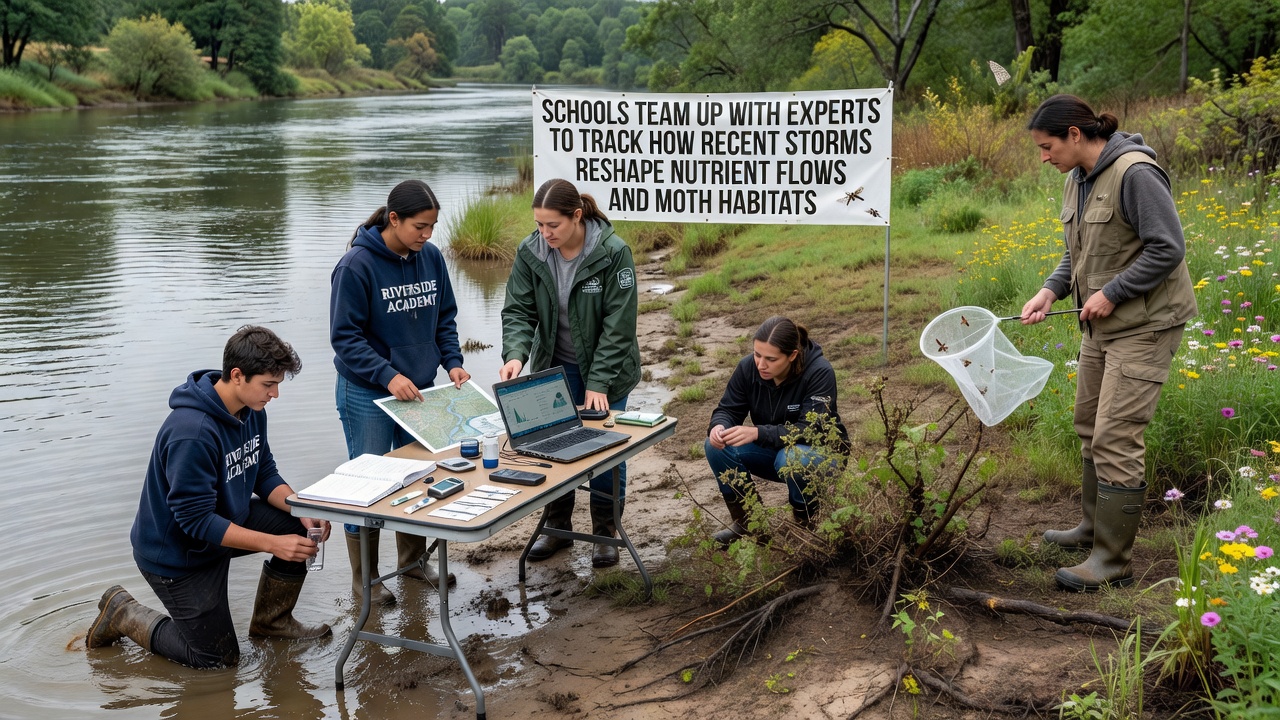
High school and university participants received instruction in both field protocols and laboratory analysis, then rotated through sampling stations on a weekly schedule. Each group maintained detailed field notebooks that included photographs of canopy damage, GPS coordinates of sampling points, and notes on observed species interactions. Faculty supervisors compiled the records into a shared database that now contains more than eighteen thousand individual measurements. The resulting time series allows analysts to model how nutrient pulses influence plant regrowth and, by extension, future food availability for herbivorous insects. A parallel project coordinated with Environment and Climate Change Canada has supplied comparative datasets from similar storm events in boreal regions, enabling cross-site validation of the observed patterns.
Longer-Term Monitoring Plans
Project leaders have secured funding to extend observations through 2028, with additional emphasis on winter storm impacts and spring canopy recovery. Plans include drone-based multispectral imaging to quantify leaf area index changes and automated pheromone traps to track adult moth dispersal across fragmented habitat patches. Schools intend to incorporate selected datasets into environmental science curricula, giving students direct experience with longitudinal ecological research. Preliminary modeling suggests that repeated canopy disturbance could shift nutrient retention thresholds within five to seven years, potentially affecting the distribution of moth species that require stable microclimates.
Conclusion
The collaborative effort demonstrates how sustained partnerships between educational institutions and scientific organizations can generate detailed records of ecosystem responses to extreme weather. Continued data collection will clarify whether the shifts observed after the 2025 and 2026 storms represent temporary fluctuations or the beginning of longer-term adjustments in nutrient cycling and insect community structure within these protected canopy systems.