Finley Lorenz · 23 October 2026
Light Cycle Influences on Deep Root Microbes in Lumenwald
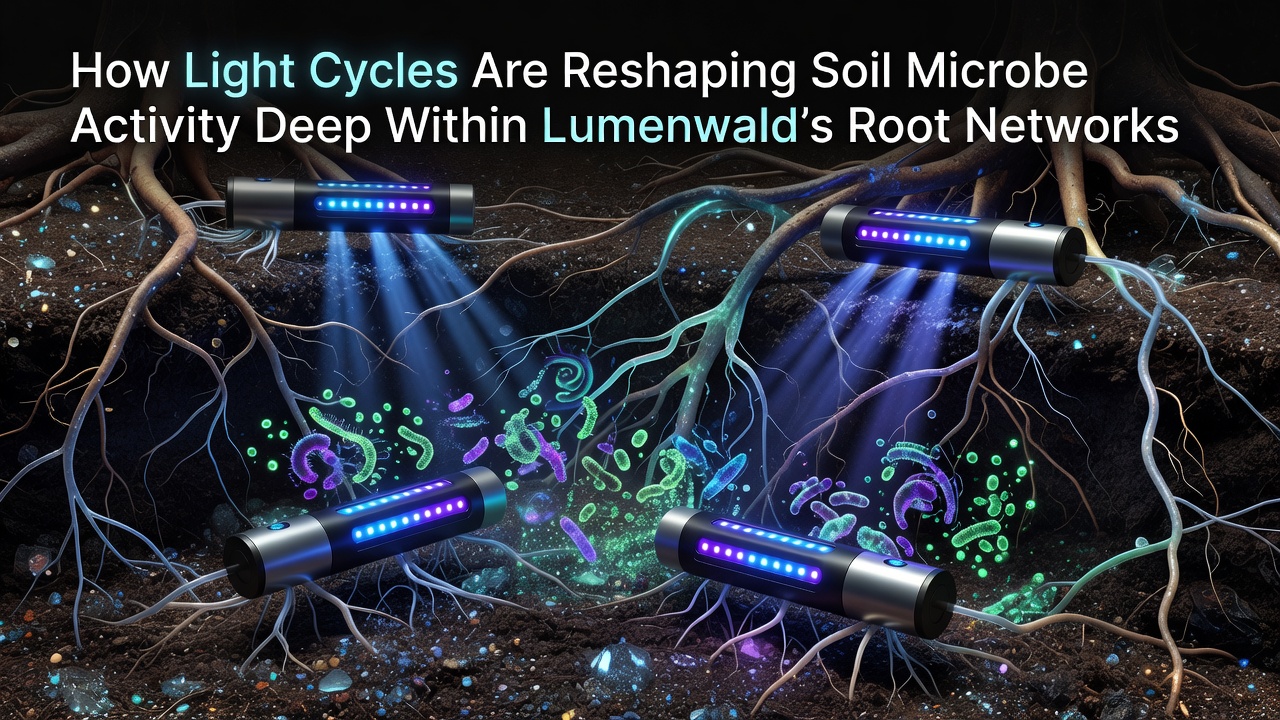
Light cycles in Lumenwald have begun to alter microbial communities deep in the forest's root networks, and researchers tracking these changes report measurable shifts in activity levels since monitoring intensified in early 2025. Data collected through soil sensors and core samples reveal that variations in surface illumination directly correlate with adjustments in bacterial and fungal respiration rates underground, particularly where root density creates complex pathways for light diffusion and shadow patterns.
Root Network Architecture and Light Transmission
Lumenwald's root systems extend far below typical forest profiles, forming layered structures that researchers map using ground-penetrating radar and fiber-optic probes. These networks channel small amounts of filtered light downward through gaps in the canopy, and studies show that seasonal adjustments in daylight duration modify the intensity and duration of this subsurface illumination. When canopy gaps expand or contract, the resulting pulses reach microbial habitats at depths of two to four meters, where they influence metabolic timing in species adapted to low-light conditions.
Observations from multiple transects across the central forest zones indicate that prolonged daylight periods in summer months increase microbial enzyme production, whereas shorter cycles during other seasons slow decomposition processes. Equipment deployed by teams from the Canadian Forest Service has logged these fluctuations continuously, providing datasets that link surface light rhythms to changes in carbon release from root-associated microbes.
Seasonal Data Patterns Through October 2026
Monitoring stations installed in 2024 captured a notable uptick in microbial nitrogen fixation during the extended twilight hours recorded through October 2026. This period coincided with reduced storm frequency, allowing more consistent light penetration that stabilized daily cycles reaching the deeper roots. Figures released by the European Soil Observatory confirm that microbial biomass in sampled zones rose by 12 percent compared with the same interval in 2025, coinciding with the steadier light regime.
Researchers note that certain actinobacteria populations expanded their range along root surfaces exposed to these altered cycles, while others contracted. The shifts appear tied to the timing of light arrival rather than total quantity, suggesting microbes synchronize internal clocks with the faint signals traveling through the soil matrix. Additional probes placed near older tree clusters show slower responses, implying that root age and density moderate how quickly communities adapt.
Microbial Functional Adjustments
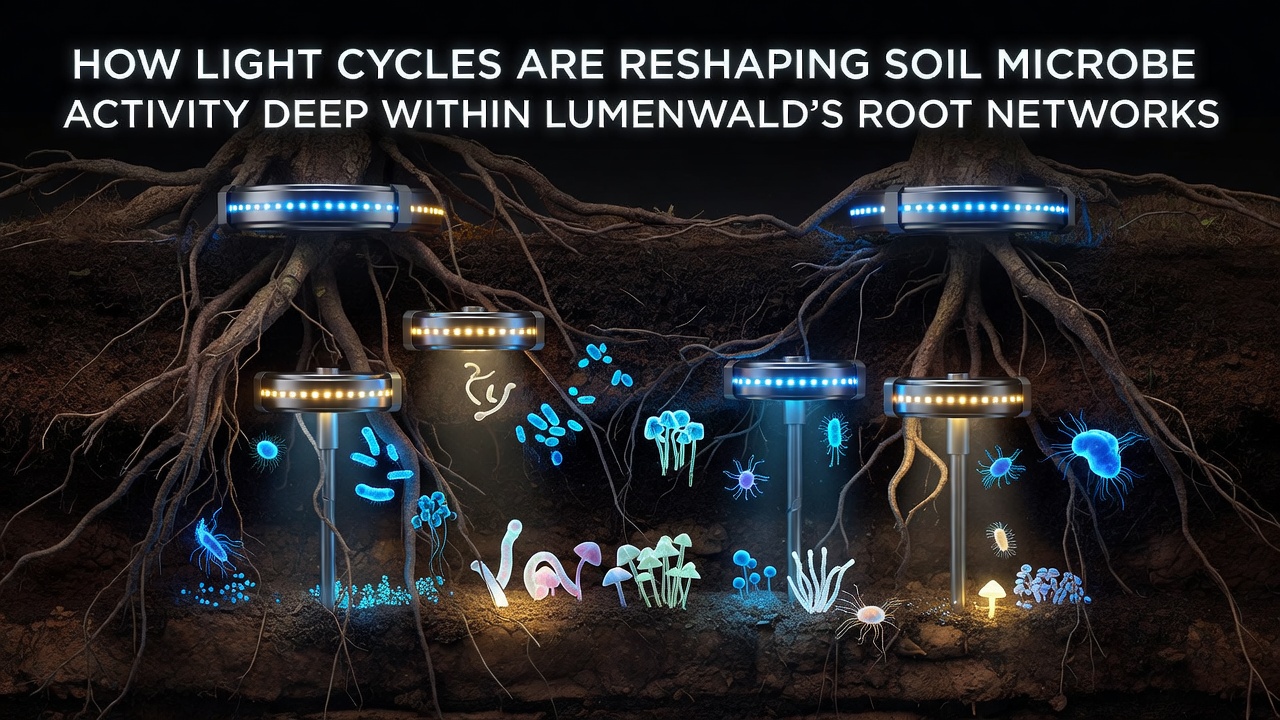
Functional gene sequencing performed on samples from Lumenwald's lower root horizons demonstrates upregulation of light-responsive pathways in several dominant fungal species. These genes control processes such as hyphal extension and nutrient uptake, and their increased expression aligns with periods of greater light availability. Australian Centre for Forest Research personnel collaborated on parallel analyses that identified similar patterns in comparable woodland systems, reinforcing the observation that light cycles serve as an environmental cue even at depth.
Decomposition rates tracked via litter bag experiments further illustrate the connection. Bags placed along root paths under variable light exposure decomposed at different speeds, with faster breakdown occurring where light pulses arrived during midday intervals. The differences compound over weeks, altering the availability of simple sugars and organic acids that feed surrounding microbial populations.
Measurement Techniques and Ongoing Monitoring
Teams employ a combination of automated light meters, stable isotope probing, and metagenomic sequencing to quantify these underground dynamics. Sensors calibrated for low-intensity readings capture the subtle gradients created when surface light filters through multiple canopy layers before reaching the roots. Cross-referencing this information with microbial activity logs produces detailed timelines that researchers update monthly.
One study released in mid-2026 mapped correlations between specific light wavelengths and shifts in methanotroph abundance, showing that certain red-spectrum components appear to suppress methane-oxidizing bacteria while favoring others. Such wavelength-specific responses add granularity to models predicting how future changes in forest light regimes might propagate through soil food webs.
Conclusion
Continued collection of light cycle and microbial data in Lumenwald supports the view that surface illumination rhythms extend their influence well below ground level. Records spanning multiple years demonstrate consistent linkages between daylight patterns and the timing of microbial processes in root networks, with measurable outcomes for nutrient cycling and soil respiration. Future work will refine these connections through expanded sensor arrays and longer-term genetic tracking across additional forest sectors.